 |
| Saturn (Northern Hemisphere), by Cassini on September 13, 2017 |
Arriving in orbit in 2004 around Saturn, Cassini spent 13 years studying the planet's system and rings. Cassini made an enormous contribution to the knowledge of humankind about the ringed planet, such as the discovery that Titan and Enceladus, two of Saturn's moons, are possibly capable of supporting life. With the fact that the probe's fuel was running out and to avoid it ever crashing into the huge Titan or icy Enceladus with the danger of contaminating it with Earth microbes, Cassini and its mission had to come to a close. Dying as it lived, the "well-oiled, data-gathering machine" plunged into the atmosphere of Saturn on Friday, September 15, 2017. Their predictions of collecting data was met with 30 seconds more than they had expected, Cassini the probe doing more than expected until the very end.
"The spacecraft did everything we asked it to - everything - right to the very end," said Cassini spacecraft operations manager Julie Webster. "That's all you want for any human, let alone a robot."
Written by Space.com Contributor, Nola Taylor Redd, the events of Cassini, from 2004 to the present, has impacted NASA and all of the world with calculations, discoveries, and images. More "professionally" known as the "Cassini-Huygens" mission, it was actually a collaboration between NASA, the Italian Space Agency (Agenzia Spaziele Italiana (ASI) ), and the European Space Agency (ESA), a unity of countries in space exploration and study.
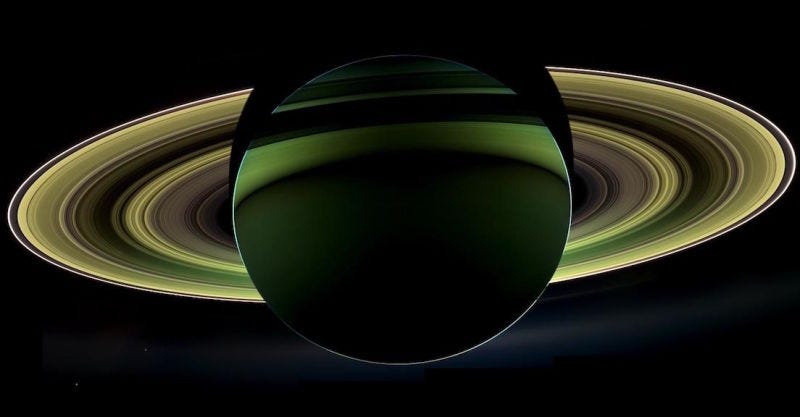 |
| Saturn, by Cassini in 2012 |
https://www.space.com/38171-cassini-saturn-crash-went-perfectly.html

The United States discovered amazing things on Saturn with its state of the art technology. We've learned more about the planet and its moons. This mission could not have gone better.
ReplyDelete